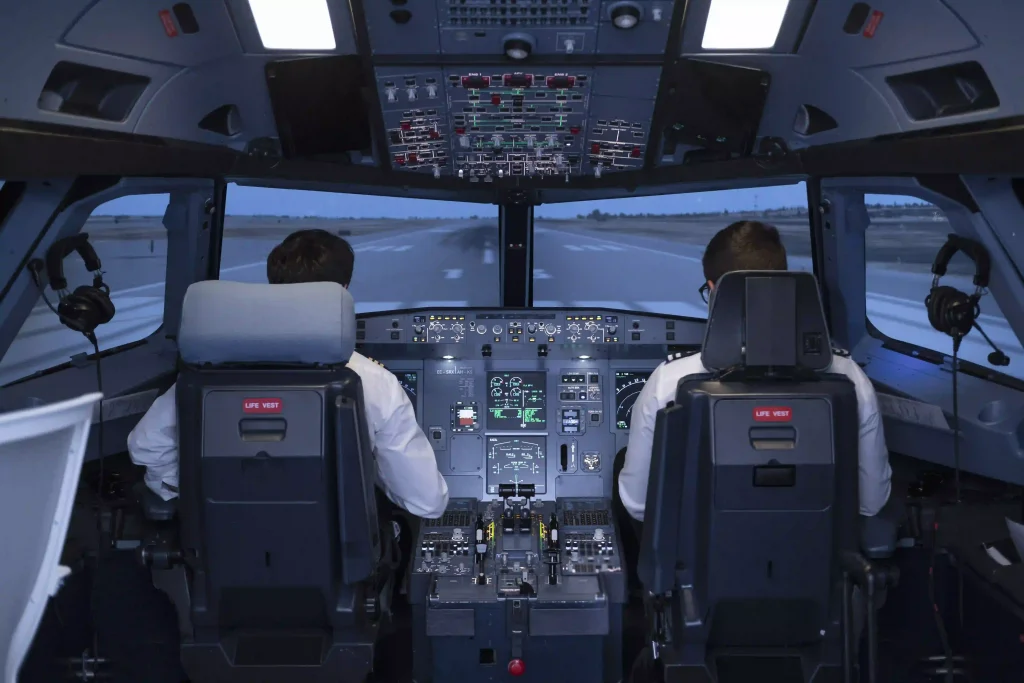
The Instrument Rating (IR) Course is designed for licensed pilots who wish to enhance their skills and fly under Instrument Flight Rules (IFR). This training equips pilots with the ability to operate an aircraft safely in low-visibility and adverse weather conditions using cockpit instruments and navigation systems.
The program combines ground school instruction with simulator and flight training, covering the essential knowledge and practical competencies required for instrument flying, ensuring pilots develop precision, situational awareness, and strong procedural discipline throughout the course.
Upon completion, graduates will obtain a DGCA-issued Instrument Rating, enabling them to operate flights in a wider range of weather conditions and further advancing their qualifications toward the Airline Transport Pilot License (ATPL). The program runs for approximately two (2) months, depending on student performance, weather conditions, and regulatory processing.
The training phases of the IR are as follows:
| Phase | Durations | |
| Ground | Flight Training | |
| Instrument Rating (IR) | 50 hours | 24 hours |
| Flight Simulator | 16 hours | |
| Checkride | – | 1 hours |
| TOTAL | 50 hours | 41 flight hours |
Note: Training duration may vary depending on weather, DGCA document processing, and trainee progress/performance.
Application Requirements
Applicants are required to submit the following documents:
- Application Form
- DGCA Class 2 Medical Certificate
- Copy of ID Card / KTP
- Copy of Passport (if any)
- Copy of Family Card (KK)
- Curriculum Vitae (CV)
- Copy of Birth Certificate
- Indonesia Police Screening Letter (SKCK)
- Copy of Private Pilot License (PPL) or Commercial Pilot License (CPL)
- Copy of Flight Logbook (last 4 pages)
- Latest ID Photo (Red Background and Wearing White Shirt with Collar & Necktie) : 2pcs 4x6cm, 2pcs 3x4cm, 2pcs 2x3cm
License Issuance Requirements:
- ICAO English Language Proficiency Level 4
Indonesia Security Clearance (from TNI-AU Headquarter) is additional requirements for foreign student applicants.
Ready to take the first step toward your aviation career? At Alpha Aviation Group (AAG) Indonesia, we have streamlined our admission process to ensure we select candidates who are truly prepared for the rigors and rewards of commercial flight training.
Here is what you can expect during your admission journey:
- Admission Fee: Your application process begins with the settlement of the standard admission fee, which formally registers your intent to join our academy.
- Final Interview: The final step before earning your place in the program is a personal interview conducted directly by our Chief Instructor and the Principal or School Administrator in Batam. This is not just an evaluation of your technical readiness, but an opportunity for us to understand your passion, drive, and commitment to a lifelong career in aviation.
Once you successfully navigate these steps, you will be ready to join our next intake and begin your transformation into a world-class pilot.