

Regulatory, Clinical Protocols, and Aeromedical Clearance
Before an aviation cadets ever handling the flight controls or logs an initial solo flight hour, their professional trajectory starts entirely from the aeromedical assessment, which is universally known as the Medical Examination (Medex). The Medex today represents a predictive physiological and clinical audit.
The examination established under international conventions and domestic statutes, this regulatory health requirement ensures that flight crew operating within civil airspace possess the psychophysical integrity required to handle cabin altitude pressures, high-workload cockpits, and sudden operational emergencies without risking acute incapacitation.
Frequent examinations often create anxiety among aviators, while civil aviation authorities actually structure these assessments around tiered risk profiles, objective clinical benchmarks, and established legal waiver pathways.
That’s why understanding the underlying aeromedical standards, clinical testing stations, disqualifying thresholds, and procedural preparation demystifies the examination process and frames health preservation as a lifelong professional discipline.
Aeromedical Assessment and Its Regulation
The pilot medical examination is governed internationally by standards codified by the International Civil Aviation Organization (ICAO Annex 1: Personnel Licensing), which individual civil aviation authorities adopt and enforce through national safety regulations.
In the United States, these standards are codified under Federal Aviation Regulations 14 CFR Part 67 and administered by the Federal Aviation Administration (FAA). In Europe, regulatory oversight is executed by the European Union Aviation Safety Agency (EASA) under Part-MED. In Indonesia, aeromedical standards are administered by the Directorate General of Civil Aviation (DGCA, or Direktorat Jenderal Perhubungan Udara) pursuant to Civil Aviation Safety Regulations (CASR) Part 67 (Standar Kesehatan dan Sertifikasi Personel Penerbangan).
This is why an aeromedical certificate is a distinct legal credential separate from a flight crew license. Under all major aviation authorities, flight privileges cannot be legally exercised without a valid, corresponding medical assessment.
The Designated Aviation Medical Examiner Representatives (DAMER) is designated as an Aviation Health Center physician or flight surgeon. Their primary responsibility is the prevention of in-flight incapacitation (a pilot doesn’t suddenly pass out or fall critically ill while flying). Incapacitation can present as subtle cognitive degradation (such as hypoxia-induced executive dysfunction or spatial disorientation) or acute physical collapse (such as sudden myocardial infarction, generalized tonic-clonic seizures, or severe barotrauma).
For that reason, aeromedical standards operate across a tiered hierarchy structured around operational risk, passenger capacity, aircraft weight, and cockpit crew composition (in Indonesia still based on CASR Part 67):
- Class 1 Medical Certificate: The most stringent aeromedical evaluation, mandatory for Airline Transport Pilot License (ATPL) holders and Commercial Pilot License (CPL) holders engaged in commercial air transport. It enforces exacting thresholds for cardiovascular reserve, visual acuity, and neurological stability. Valid for 6 months
- Class 2 Medical Certificate: Designed for commercial utility operations, aerial work, flight instructors, and, under specific regulatory structures such as Indonesia’s CASR Part 67, Private Pilot License (PPL) holders, sport pilots, and student pilot cadets embarking on primary flight training. Valid for 1 year (12 months)
- Class 3 Medical Certificate: Tailored for non-pilot aviation safety personnel whose continuous vigilance directly impacts air traffic management—primarily Air Traffic Control (ATC) officers and Flight Operations Officers (FOO)—as well as private pilots in jurisdictions that maintain a dedicated recreational tier. Valid for 2 years (24 months)
For more detail about these medical classes in Indonesia, you can contact us for any help.
Comparative Renewal and Validity Lifecycles
Now, because the certificate needs regular renewal, every pilot needs to pay attention to their Medical Class License validity. The legal validity of an aeromedical certificate varies inversely with pilot age and operating privilege. While initial baseline examinations confirm constitutional fitness, periodic renewals monitor age-related physiological changes.
Under CASR Part 67, if an aeromedical examination is completed within the final 45 days of an active certificate’s lifecycle, the new certificate preserves operational continuity, taking effect from the expiration date of the previous credential.
Since there are many different regulation jurisdictions, here’s the comparison regulation between the medical classes.
| Regulatory Jurisdiction | Medical Class | Operational Privileges | Age Threshold | Standard Validity Interval |
| DGCA Indonesia (CASR Part 67) | Class 1 | ATPL, CPL (Commercial Air Transport) | All ages | 6 calendar months |
| Class 2 | PPL, Student Pilot, Flight Instructor | All ages | 12 calendar months | |
| Class 3 | Air Traffic Controller (ATC), FOO | < 50 years>= 50 years | 24 calendar months 12 calendar months | |
| FAA (14 CFR § 61.23 / Part 67) | Class 1 (First-Class) | Airline Transport Pilot (ATP) | < 40 years>= 40 years | 12 calendar months 6 calendar months |
| Class 2 (Second-Class) | Commercial Pilot, Flight Instructor | All ages | 12 calendar months | |
| Class 3 (Third-Class) | Private Pilot, Student Pilot | < 40 years >= 40 years | 60 calendar months24 calendar months | |
| EASA (Part-MED) | Class 1 | Commercial Air Transport (CAT) | < 60$ years >= 60 years (or >= 40 single-pilot CAT) | 12 calendar months6 calendar months |
| Class 2 | Non-commercial PPL, Sailplane | < 40 years40–50 years> 50 years | 60 calendar months24 calendar months12 calendar months |
The Clinical Examination Protocols
Before we explain this part further, please take note of the medical disclaimer. The following information is provided for general guidance and educational purposes only and does not constitute certified aeromedical advice.
For detailed requirements, personalized evaluations, and regulatory assessments, please consult a certified medical doctor or Designated Aviation Medical Examiner Representatives (DAMER).
Diagnostic Stations and Methodologies
Unlike routine outpatient preventive screenings, an initial Class 1 or Class 2 Medex functions as an evidentiary aeromedical evaluation. In Indonesia, the examination location is centralized at the Balai Kesehatan Penerbangan (Hatpen) under the Ministry of Transportation in Kemayoran, Central Jakarta, alongside authorized regional assessment hospitals: RS Harapan Keluarga in Mataram (Nusa Tenggara Barat), RS Kasih Ibu in Denpasar (Bali), and RS Surya Husada in Denpasar (Bali). The clinical evaluation spans nine diagnostic stations designed to verify physiological and psychological fitness for flight.
Laboratory Diagnostic Panels and Toxicology
The diagnostic begins with venipuncture and midstream urine collection to evaluate metabolic, renal, and hematological function. The complete blood count (CBC) shows baseline hemoglobin and hematocrit levels. This will confirm that the body can transport sufficient oxygen throughout the system, even under reduced cabin atmospheric pressures.
Then serum chemistry panels measure fasting blood glucose and lipid markers. The test also includes total cholesterol, low-density lipoproteins (LDL), and triglycerides to evaluate long-term atherogenic risk.
Renal markers, including blood urea nitrogen (BUN), serum creatinine, and uric acid, are also evaluated in detail. High uric acid increases the risk of gout and kidney stones, which can cause sudden, incapacitating pain while flying. Meanwhile, an urinalysis detects early signs of diabetes, kidney disease, and internal bleeding.
A forensic toxicology screen is also conducted on the urine specimen to identify unauthorized pharmaceuticals, sedative-hypnotics, amphetamines, cannabinoids, opioids, or psychoactive metabolites.
Audiometric and Otorhinolaryngological Testing
Beside the metabolic system health, a pilot is also mandatory to have normal receptive systems. The reason is because safe instrument flight operations depend on clear radio communication and immediate reception of cockpit auditory warnings.
Otorhinolaryngological screening begins with the conversational voice test, requiring the applicant to hear and repeat spoken words in a quiet room at a distance of 6 feet (2 meters) from the examiner, with their back turned to prevent visual lip-reading.
If vocal discrimination reveals deficits, or as a standard requirement during initial Class 1 evaluations, pure-tone audiometry evaluates threshold sensitivity across standard speech frequencies (e.g. 500, 1000, 2000, and 3000 Hz like in FAA US). Otoscopic examination evaluates the external auditory canal and tympanic membrane to ensure the absence of chronic perforations, middle-ear effusions, or otosclerosis that could compromise pressure equalization.
| Audio Frequency (Hz) | Maximum Allowable Loss: Better Ear | Maximum Allowable Loss: Poorer Ear |
| 500 Hz | 35 dB | 35 dB |
| 1000 Hz | 30–35 dB | 35–50 dB |
| 2000 Hz | 30–35 dB | 35–50 dB |
| 3000 Hz | 40–50 dB | 50–60 dB |
Based on FAA Guide for Aviation Medical Examiners (AME)
In DGCA, Indonesia regulation, there’s indeed audiometry examination too, but we were unable to find any detailed public information on its measurement guidance.
Odontological Assessment and Barodontalgia
Next is the aeromedical dental evaluation which focuses on identifying trapped gas within the maxilla and mandible. Flight operations expose the human body to cyclic barometric shifts, with commercial cabins pressurized to altitudes between 6,000 and 8,000 feet. The physical mechanism underlying dental complications is dictated by Boyle’s Law, which states that the volume of a dry gas is inversely proportional to surrounding pressure at a constant temperature.
Let’s put aside that law and let’s imagine the real condition. As aircraft ascend, ambient cabin pressure decreases, causing unvented gas within a tooth to expand. In teeth with untreated carious lesions, failing restorations, incomplete root canal treatments, or sub-clinical periapical micro-abscesses, expanding gas exerts pressure on pulpal nociceptors inside rigid dentinal walls.
The process triggers barodontalgia (aerodontalgia) which is an acute, debilitating toothache that can cause severe distraction or syncope during critical flight phases. Extreme pressure differentials can also cause structural micro-fractures in dental restorations, a condition known as odontocrexis. You can read about barodontalgia further from these papers:
- Relationships among barodontalgia prevalence, altitude, stress, dental care frequency, and barodontalgia awareness: a survey of Turkish pilots (2024)
- Aviation Dentistry: Preflight Dental Check on the Fighter Pilots (2026)
Examiners require active dental caries to be fully restored before medical clearance is issued. Fixed orthodontic brackets, removable partial prosthetics, and historical extractions are clinically acceptable, provided they remain structurally stable, cause no oral mucosal ulceration, and do not interfere with clear radio telephony.
Ophthalmological Standards and Color Perception
Aviation conditions demand optical sight and color precision. This is why the medical examination also demands Ophthalmological screening.
Ophthalmological screening evaluates distant, intermediate, and near visual performance, as well as chromatic discrimination. These are optical vision tests that are often examined (cited from Capt. Lim Khoy Hing):
- Visual Acuity Thresholds: Distant visual acuity must measure 20/20 in each eye separately, with or without optical correction. Near and intermediate acuity must meet 20/40 or better at 40 cm and 80 cm to ensure clear reading of electronic flight bags (EFBs), primary flight displays (PFDs), and overhead cockpit switch panels.
- Corrective Optics: Spectacles and contact lenses are permitted for aeromedical certification. When optical aids are required to achieve the 20/20 standard, the medical certificate includes an operational limitation, such as “Holder shall wear corrective lenses while exercising flight privileges”.
- Keratorefractive Surgery: Procedures such as LASIK and PRK are accepted by civil aviation authorities. Certification requires an appropriate post-operative stabilization interval (typically 6 weeks to 6 months depending on surgery type and jurisdiction), alongside specialist evaluation confirming the absence of corneal haze, daytime glare, halos, night-vision loss, or chronic dry-eye syndrome.
- Color Perception: Aviators must accurately interpret electronic flight instrument systems (EFIS), navigation lights, and runway light gun signals. If an applicant fails the plate screening, secondary testing using approved color lanterns (e.g., Farnsworth Lantern, Beyne, or Spectrolux) or computerized color assessments is conducted to determine functional color perception.
Thoracic Radiography and Pulmonary Function
The ability of the pilot to maintain consciousness in the middle of flight tested with a standard posterior-anterior (PA) chest radiograph. The radiograph will evaluate the pulmonary parenchyma, pleural spaces, and cardiac silhouette. This imaging will detect active pulmonary tuberculosis, infiltrative lung disease, cavitary lesions, and asymptomatic subpleural bullae.
Subpleural lung blebs present a major aviation safety risk during rapid climbs or sudden cabin depressurization. Under these flight conditions, the trapped air expands and can rupture a bulla into the pleural cavity, triggering a tension pneumothorax and acute respiratory collapse in flight. Spirometry complements imaging by evaluating Forced Vital Capacity (FVC) and Forced Expiratory Volume in 1 second in candidates presenting a clinical history of reactive airway disease.
Cardiovascular Hemodynamics and Exercise Stress Testing
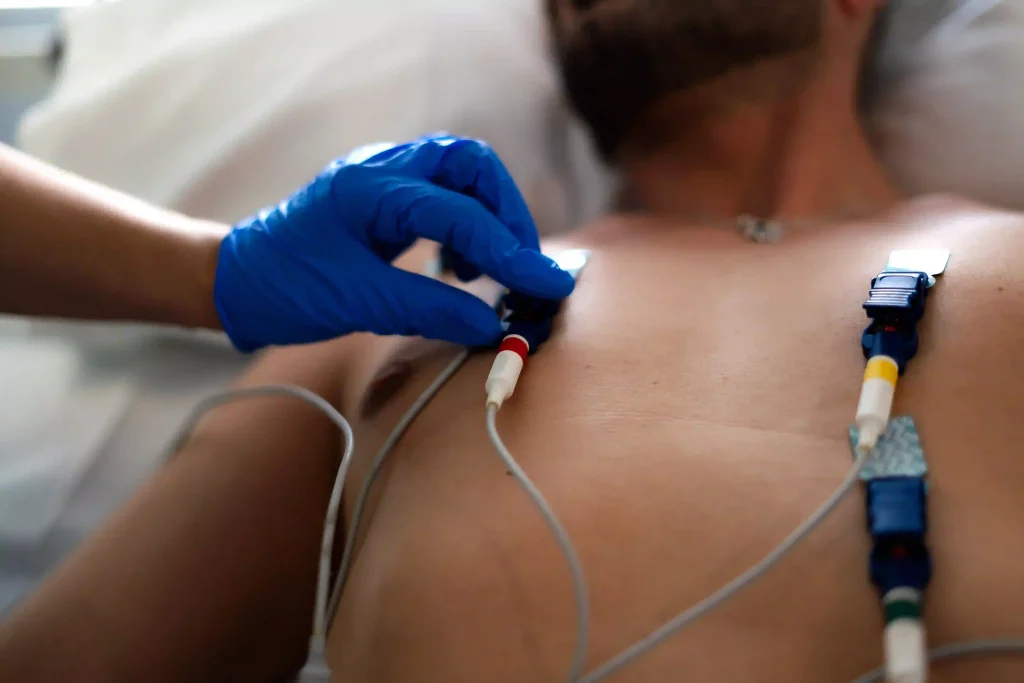
Another test that an aviator also has to examine is his/her cardiovascular health. A cardiovascular evaluation is the primary defense against sudden in-flight incapacitation. Baseline testing utilizes a 12-lead resting electrocardiogram (ECG) to identify cardiac rhythm disturbances, pre-excitation syndromes (such as Wolff-Parkinson-White syndrome), pathological bundle branch blocks, long QT intervals, or silent ischemic changes.
The FAA requires a baseline ECG at age 35, followed by annual tracings from age 40 onward for Class 1 holders. EASA and CASR Part 67 mandate an ECG at initial Class 1 certification, every two to five years until age 40, and annually thereafter.
Dynamic treadmill stress testing (Stress ECG using standard Bruce protocols) is incorporated during initial examinations, at older age thresholds, or when resting tracings show non-specific repolarization anomalies. In result, resting hemodynamic measurements must remain within established limits.
For example, FAA guidelines set a maximum clinical blood pressure ceiling of 155/95 mmHg, whereas DGCA and EASA targets require resting pressures below 140/90 mmHg. This is why uncontrolled hypertension requires medical stabilization before flight privileges are granted.
Physical Somatoscopy and Musculoskeletal Screening
There is also general physical examination that requires candidates to disrobe down to their undergarments to allow an unimpeded physical assessment. The aeromedical physician evaluates:
- Musculoskeletal Integrity & Mobility: Range of motion across major articular joints, cervical spine flexibility, spinal curvature (scoliosis, lordosis), and limb strength are evaluated to confirm the pilot can operate manual rudder controls and manage flight inputs during turbulence or primary hydraulic failures.
- Surgical Scars & Integumentary Audit: The physical exam identifies past surgical interventions (e.g., laparotomies, major orthopedic reconstructions), prompting the physician to review associated operative and recovery records.
- Abdominal & Hernia Palpation: Deep palpation of the abdominal wall and inguinal rings identifies active hernias, which present a risk of strangulation or incarceration during heavy physical exertion or sustained G-load maneuvers.
- Vascular Integrity: Palpation of peripheral pulses and lower extremity inspections evaluate for deep venous insufficiency or extensive varicosities, which elevate the risk of deep vein thrombosis during prolonged commercial sectors.
Cortical Neuro-Electric Assessment with Electroencephalography Protocols
A neurological assessment evaluates deep tendon reflexes, cranial nerve integrity, and cerebellar coordination through tests like Romberg balance assessments, finger-to-nose tracking, and tandem gait walking.

In Indonesia, initial pilot certification uniquely mandates an Electroencephalogram (EEG) to examine cortical electrical activity. This test screens for subclinical epileptiform discharges, latent focal cerebral anomalies, or generalized paroxysmal wave complexes that indicate seizure disorders or an elevated risk of sudden alterations of consciousness.
During the EEG recording, multi-channel scalp electrodes are secured using conductive paste. The examinee remains supine in an electrically shielded room for 20 to 30 minutes, maintaining physical relaxation with eyes closed without falling asleep, as early stage drowsiness alters baseline cortical wave morphology.
Provocation techniques, including hyperventilation (inducing cerebral vasoconstriction) and intermittent photic stimulation (stroboscopic flashes at varying frequencies), are systematically introduced to trigger latent epileptiform reactions. Movement artifacts, eye blinks, or failure to achieve relaxation can invalidate the reading, requiring the diagnostic run to be restarted.
Disqualifying Conditions and Waiver Pathways
In aeromedical reviews, psychiatric stability and neurological integrity are treated with heightened scrutiny. Over the past decade, aeromedical disqualification drivers have shifted from classic cardiovascular disease toward mental health concerns, neurodevelopmental diagnoses, and the use of psychotropic medications. Psychiatric and behavioral conditions now account for approximately 31% of formal medical clearance denials, surpassing cardiovascular etiologies (24%).
Mandated Disqualifying Medical Conditions
Aviation authorities enforce lists of medical conditions considered disqualifying by medical history or clinical diagnosis. An Aviation Medical Examiner (AME) operating at the clinic level cannot unilaterally issue an unrestricted medical certificate if an applicant presents an active history of these pathologies (based on FAA list and FAA AME Guide):
| Clinical Category | Mandated Disqualifying Condition | Aviation Operational Hazard | Note |
| Cardiovascular | Angina Pectoris | Acute myocardial ischemia. Severe chest pain causing flight incapacitation. | |
| Coronary Artery Disease requiring intervention | Fatal cardiac dysrhythmias or acute coronary thrombosis. | ||
| Myocardial Infarction | Myocardial scar tissue, reduced cardiac output, risk of sudden re-infarction. | ||
| Permanent Cardiac Pacemaker | Component failure, lead displacement, vulnerability to cockpit EMF interference. | ||
| Cardiac Valve Replacement | Thromboembolic stroke, mechanical valve failure, bleeding risks from chronic anticoagulants. | ||
| Heart Replacement (Transplantation) | Accelerated allograft vasculopathy, immunosuppression risks. | ||
| Endocrine | Diabetes Mellitus requiring hypoglycemic medications | Acute hypoglycemia causing confusion, cognitive collapse, or loss of consciousness. | |
| Neurological | Epilepsy / Unprovoked Seizure Disorders | Generalized tonic-clonic convulsions, loss of motor control and consciousness. | |
| Unexplained Disturbance of Consciousness | Unheralded syncope, blackouts, or sudden loss of posture. | We can’t find enough reference for this neurological condition, but the FAA mentions this on their list. | |
| Transient Loss of Nervous System Control | Transient ischemic attacks, acute motor paralysis, sudden sensory deficits. | ||
| Psychiatric | Psychosis / Delusional Conditions | Impaired reality testing, paranoia, hallucinatory disruption of command authority. | |
| Bipolar Disorder | Severe mood swings, mania, grandiosity, erratic decision-making. | ||
| Severe Personality Disorder (with overt acts) | Non-compliance with SOPs, anti-authority attitudes, disrupted crew resource management. | ||
| Substance Related | Substance Abuse | Impaired judgment, risky behavior, failed drug screenings. | |
| Substance Dependence (Alcohol / Drugs) | Neurochemical dependence, severe withdrawal syndromes, cognitive degradation. |
Mental Health Checks: Mood Disorders, ADHD, and Medications
Aeromedical certification standards enforce rigorous requirements regarding histories of neuropsychiatric conditions. Consequently, authorities place widespread clinical scrutiny on diagnoses such as major depressive disorder and generalized anxiety.
The strict regulatory oversight also extends to attention-deficit/hyperactivity disorder (ADHD). Furthermore, examiners closely evaluate any reliance on psychoactive medications when determining flight fitness.
- Antidepressants (SSRIs): Psychotropic pharmacotherapy once carried an absolute, permanent bar to flight clearance. Modern aeromedical policies (such as the FAA Special Issuance SSRI pathway and EASA secondary evaluations) provide conditional certification routes. Clearances require monotherapy with approved agents (such as sertraline, escitalopram, fluoxetine, or citalopram), complete clinical remission, a documented period of stability (typically 6 to 12 months minimum), and specialized neuro-cognitive testing confirming the absence of sedation, executive dysfunction, or inattention.
- ADHD and Psychostimulant Treatments: A childhood or adult diagnosis of ADHD receives close aeromedical review. Central nervous system stimulant medications prescribed for ADHD (e.g., methylphenidate, mixed amphetamine salts) remain aeromedically disqualifying due to potential rebound effects, cardiovascular stimulation, and operational dependency. Applicants with a history of ADHD must show sustained cessation of medication, submit complete academic and clinical records, and undergo specialized neuropsychological testing (such as the CogScreen-AE battery) to verify normal executive processing.
Special Issuance, SODA, and Medical Boards
A common fear among pilot candidates is that an initial medical deferral or flagged condition results in a permanent career bar. In practice, most applicants who undergo aeromedical review eventually secure certification through conditional exemptions, monitored waivers, or demonstrated performance assessments. Therefore, don’t be afraid to consult and keep improving your health.
When an examination reveals a condition that exceeds standard regulatory thresholds, the AME issues an administrative deferral. The applicant’s file is then transferred directly to the civil aviation authority’s aeromedical division for further evaluation. The authority reviews specialist reports and diagnostic results through established administrative pathways:
- Special Issuance (SI): This mechanism addresses chronic or dynamic conditions that do not meet standard medical criteria, but can be managed safely without jeopardizing flight operations. Examples include diet- or metformin-controlled Type 2 diabetes, medically managed essential hypertension, CPAP-compliant obstructive sleep apnea, and stable coronary artery disease following revascularization. A Special Issuance is time-limited, requiring periodic specialist reports and diagnostic updates to maintain certification validity.
- Statement of Demonstrated Ability (SODA): This pathway is used for static, non-progressive physical defects that fall outside traditional medical criteria. Examples include a minor limb amputation, a static orthopedic deformity, or mild hearing and vision deficits. Rather than requiring periodic medical monitoring, a SODA involves an operational practical flight test or simulator assessment with an aviation flight examiner to prove the candidate can manipulate aircraft controls safely. A SODA remains valid indefinitely as long as the underlying physical condition does not deteriorate.
- DGCA Indonesia Medical Board Review: Under CASR Part 67, when an applicant at Balai Hatpen presents findings outside standard clinical parameters, their file is referred to an aeromedical review board. The board examines secondary opinions from independent clinical specialists (such as cardiologists, neurologists, or ophthalmologists), assesses operational flight risk, and determines whether to issue a conditional clearance or assign specific operational endorsements.
Pre-MedExam Preparation and Physiological Optimization
Preparing for an aeromedical examination indeed requires thorough administrative organization and sensible physiological management. Because candidates might frequently encounter unnecessary delays, added testing expenses, and deferrals due to incomplete documentation or transient physiological spikes caused by poor habits on exam day. This is why everything should be prepared and we at Alpha Aviation Group (AAG) Indonesia are always ready to assist and guide your medex class issuance.
Assembling the Clinical Dossier
Aviators or cadet candidates with pre-existing medical conditions must compile a comprehensive medical dossier prior to booking their examination. In cases of prior major surgery, such as appendectomies, laparoscopic procedures, or orthopedic internal fixation candidates must gather detailed operative notes and pathology findings. Additionally, they need to include official hospital discharge summaries to ensure an exhaustive medical history .
Applicants who have undergone keratorefractive surgery must provide operative documentation detailing their pre-procedure baseline refraction and complete post-operative healing records. In addition, they are required to submit diagnostic test results confirming the complete absence of corneal complications. Also if possible, candidates should bring an organized record of all prescription and non-prescription medications used over the previous 24 to 36 months, along with clearance letters from treating physicians.
These kinds of medical dossiers are easily overlooked or misplaced because they often consist of minor notes and brief records. However, they are vital documents that can directly determine your future aviation career. Therefore, make sure to systematically document and preserve every detail of your medical history.
Digital Portal Registration
Finally the registration. In Indonesia, Aviators or cadet candidates must complete their registration online through the official Balai Hatpen web portal prior to visiting the examination center. The online workflow involves:
- Creating an account on the Balai Hatpen portal to establish an electronic medical record (RM) profile.
- Completing personal demographic information and logging verified flight hours.
- Entering relevant health history, including past surgeries, hospitalizations, and specialized examinations.
- Completing and signing the digital Health Declaration Form (Form Deklarasi).
- Selecting the examination category (e.g., routine examination, formal recheck, or regional hospital evaluation) and choosing an appointment date.
- Printing the official registration confirmation and examination checklist to submit to the admissions intake and cashier desks on arrival.
Be remember that the digital health declaration is a legally binding statement regarding personal medical history, past physician visits, and previous certificate suspensions or denials. Complete transparency is required by law. Withholding known medical information or providing false statements constitutes a statutory violation under international and domestic aviation regulations. Discovered concealment leads to immediate certificate suspension or revocation, disqualification from flight training, and potential civil or criminal penalties.
Some tips for the Medical Exam Day
Leading up to their medical appointment, candidates must maintain normal physiological routines for 24 to 48 hours. Adhering to baseline habits prevents abnormal spikes or skewed test results that could lead to misleading diagnostic readings. Here are some tips of things that you have to pay attention:
- Stimulant and Caffeine Cessation: Avoid caffeine, energy drinks, and thermogenic pre-workout supplements for at least 24 hours before the appointment. Central stimulants elevate sympathetic nervous activity, which can trigger sinus tachycardia, benign cardiac extrasystoles (such as PACs or PVCs), and acute blood pressure spikes that lead to clinical deferrals.
- Dietary Sodium and Hydration: Avoid salty, processed foods the evening before the exam to reduce the likelihood of fluid retention and transient diastolic blood pressure elevations. Drink adequate plain water to prevent concentrated urine, which can produce false-positive trace readings for protein or elevated specific gravity.
- Fasting Parameters: Maintain complete fasting from food and caloric beverages for 10 to 12 hours prior to the early morning appointment to ensure accurate serum glucose and lipid profiles. Plain water is encouraged to support hydration.
- Rest and Sleep Hygiene: Obtain 7 to 9 hours of sleep the night before the examination. Acute sleep loss elevates cortisol levels, increases resting blood pressure, reduces ocular contrast sensitivity, and introduces slow-wave artifacts during the resting EEG.
- Optical Hygiene: Candidates who wear contact lenses should switch to spectacles for at least 24 to 48 hours prior to testing. This allows the cornea to return to its natural topography, preventing transient optical distortions during visual acuity checks. Candidates should bring their corrective glasses and recent optical prescriptions to the examination.
Conclusions
This guide is probably a bit too long to read, but too short to explain everything. But, the pilot medical examination is not an arbitrary barrier for your aviation career. The medex is an essential aeromedical screening framework designed to protect the flight crew, your passengers, and the air transportation system including yourself as the pilot.
Modern civil aviation standards recognize that the human body experiences physiological variations and manageable chronic conditions over time. Through systematic clinical evaluations, documented waiver channels, and specialized appeal pathways, civil aviation authorities must balance strict safety requirements with achievable certification pathways.
Earning an initial medical certificate is not a one-time administrative step to secure a pilot license. Instead, it marks the start of a lifelong professional commitment to personal health maintenance throughout an aviator’s career.
Prospective student pilots should schedule and complete a formal Class 1 aeromedical assessment before committing substantial personal and financial resources to flight academies. Confirming that visual, cardiovascular, and neurological health meet established commercial benchmarks early ensures that aspiring aviators build their careers on a sound aeromedical foundation.
So, what are you waiting for? Ready to get or renew your medical examination? Get support for your upcoming aeromedical evaluation with Alpha Aviation Group (AAG) Indonesia. You can reach AAGID admissions via id.info@aag.aero or +6281196955717 for complete consultation.